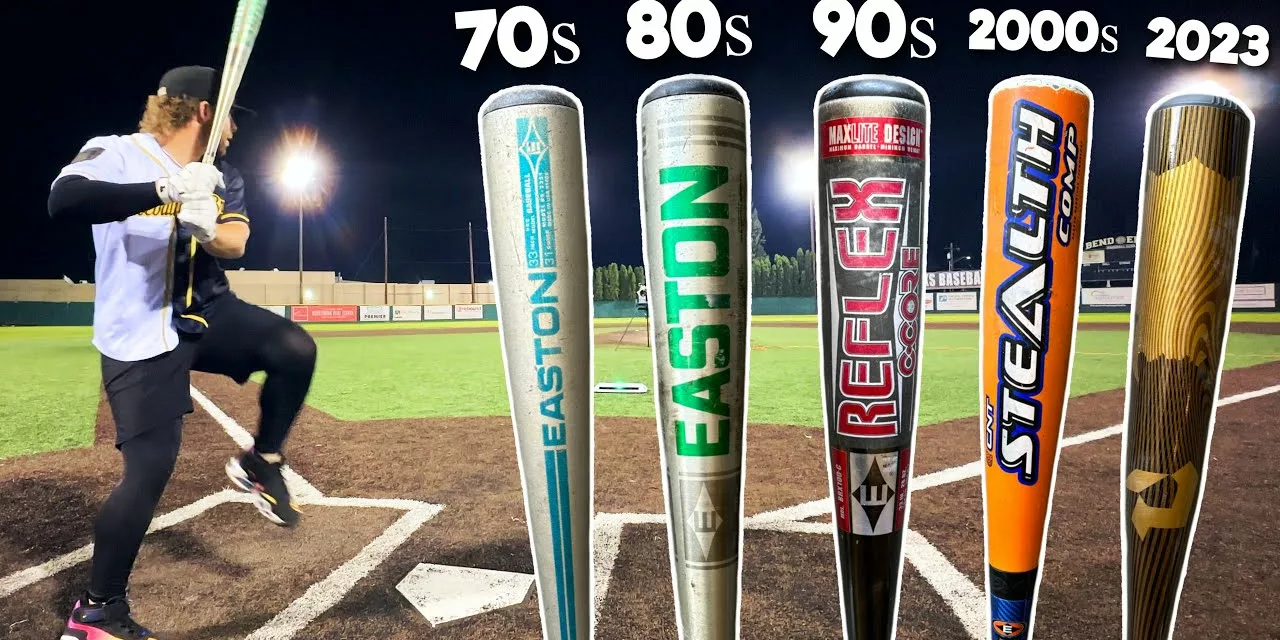
The Life of the Easton Aluminum Baseball Bat
The story of the Easton aluminum baseball bat is not just about a piece of sporting equipment—it’s about innovation, controversy, and transformation. From its birth in mid-20th-century engineering labs to its dominance on youth and collegiate fields, the Easton aluminum bat has lived a life that mirrors the evolution of modern baseball itself.
Origins: From Arrows to the Diamond
The life of the Easton aluminum bat begins long before baseball. The company behind it, Easton Sports, started in 1922 making archery equipment. Its breakthrough came in 1939 with the invention of aluminum arrows—lighter, stronger, and more consistent than wood. This expertise in shaping aluminum would later become the foundation for something revolutionary. By 1969, Easton applied its knowledge to baseball, creating one of the first aluminum bats approved for amateur play. At the time, wooden bats dominated the sport. Aluminum wasn’t just a new material—it was a radical idea.
The Easton aluminum bat entered organized baseball at just the right moment. In the early 1970s, leagues like Little League began allowing metal bats, opening the door for widespread adoption. Early models were simple—essentially hollow aluminum tubes—but they offered clear advantages:
- Greater durability (they didn’t crack like wood)
- Lighter swing weight
- Larger “sweet spots”
Then came a defining moment: the 1978 release of the B5 Pro Big Barrel, nicknamed the “Green Easton.” This bat changed everything. By reducing weight while increasing barrel size, it allowed players to swing longer bats with more control and power. The aluminum bat was no longer a novelty—it was the future.
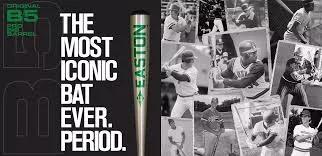
The Green Easton, the B5 Pro, a 71/78 aluminum alloy with a 2-5/8” barrel diameter, changed the game by dropping weight. Instead of swinging a 31 or 32, a player could handle a 33- or 34-inch bat, it changed the whole game. The first aluminum bats were heavy, all similar weights to wood, just with the advantage of not breaking. Easton used a higher-strength alloy and thinner walls to take the weight out of the bat without sacrificing durability, the first to do this and create the B5 Pro as a -4, four ounces of weight less than the length. In the 1980s, the B9 debuted, dubbed the Black Magic, a 2-3/4” barrel with a -3 length to weight ratio.
Growth and Dominance (1980s–1990s)
As the bat matured, so did its technology. Easton refined alloys, experimented with wall thickness, and engineered bats for performance rather than simple durability. Key innovations during this era included:
- Advanced alloys that made bats lighter and stronger
- Bigger barrels for improved contact
- C-Core technology (early 1990s), which added carbon inside the barrel for strength and performance
By the 1980s and 1990s, Easton aluminum bats dominated amateur baseball. In college programs, they became the standard, helping define an era of high-scoring games and powerful hitting. For a generation of players, the sharp “ping” of an Easton bat became the sound of the game. This is the era where Easton became the household name (almost literally). Many youth players from this time would call their son's by the name Easton because of the dominance of these bats. While not the sole cause, the popularity of the sporting goods brand Easton played a noticeable role of the male birth name—especially in the United States. Hearing “Easton” regularly in youth sports likely helped normalize it as a first name.
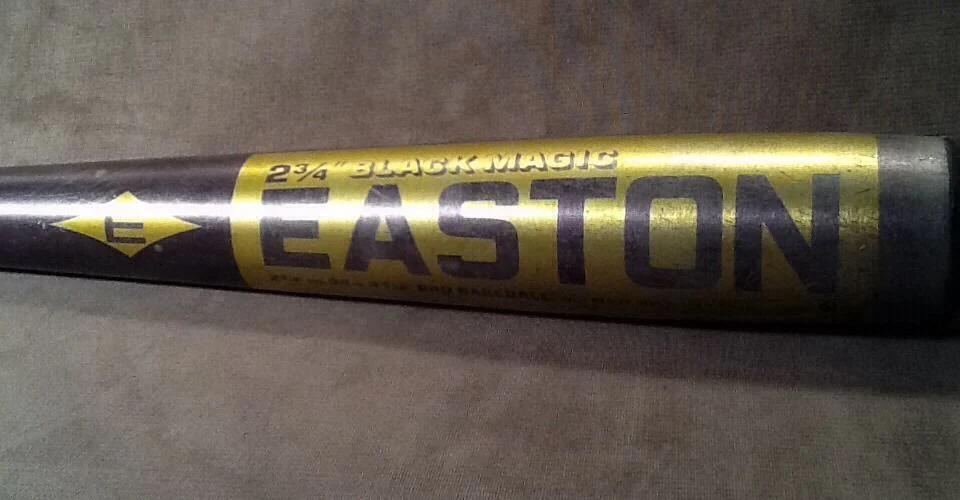
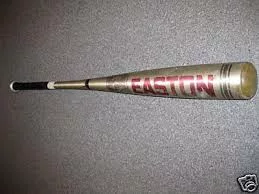
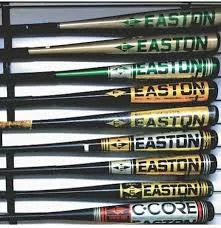
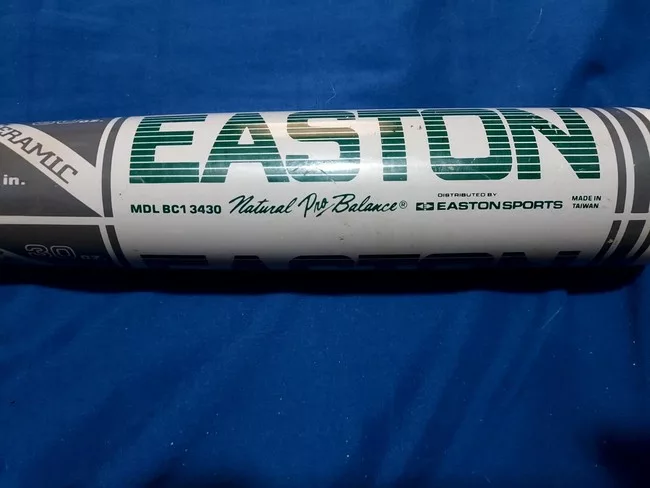
For this particular player of the 1990's, I started out with the Black Magic and then went to the Silver and Black Easton. An interesting bat that one of my high school teammates used in our senior year in 1993 was the Easton Ceramic. The 1989–1990s Easton Ceramic Bat (models like BC1/SC1) is a rare vintage composite bat, often called a "cooking pan bat," constructed from ceramic, carbon, and composite materials. Known for a stiff feel and significant vibration/pain on mishits, it performs surprisingly well for its age, with exit velocities over 100 mph reported in tests. This bat sounded terrible, but hey shout out to Allen Patterson of the Evansville North Huskies for leading our team in homeruns that year with the ceramic.
As with any sporting hard good — from arrows to golf clubs to tennis rackets — aluminum gave way to carbon and then composite. The next breakthrough came in the early 1990s when Easton bonded carbon to the inside of the barrel wall to make the outer barrel even thinner. Called the C Core for the carbon core, they crafted a lighter bat with added structure. The bats, for a baseball player, were like a new phone coming out with a screen on it.”
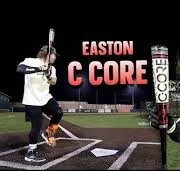
Easton then developed the first two-piece bat in 1999 that cut vibration and created natural flex.The iconic Easton Redline (often referred to as Z-Core or C-Core) baseball bat was primarily released in the late 90s, with the most popular and "legendary" models, such as the Z-Core, appearing around 1998–1999. Known as a "GOAT" bat of that era, it was a popular Scandium-alloy bat used during the 1990s and into 2000.
Evolution in a Composite World (2000s–Present)
The 2000s introduced new competition: composite bats made from carbon fiber. Easton itself helped lead this shift, creating two-piece designs and full-composite models that reduced vibration and increased performance. The first full-composite carbon bat in slowpitch softball came out in 2003 and a fastpitch version was in 2004. Creating a totally different feel and sound, engineers could also change the weighting using different hand-created carbon layups. In 2006, a two-piece version, the Stealth Comp, released and then in 2014 Easton became the first with a rotating handle.Yet aluminum never disappeared. Instead, it evolved:
- Stronger aerospace-grade alloys
- Precision-engineered sweet spots
- Hybrid designs combining aluminum and composite materials
Today, aluminum bats remain especially popular in youth leagues and training environments because of their durability, affordability, and immediate feedback on contact. Today's youth are getting the best of both worlds. Players today get all the technology advancements that Easton came bring, but the the nostalgic look of the old bats are coming back....... of course with a $400 price tag instead of the 1990's price tag.
The Bat Today: A Living Legacy
More than 50 years after its debut, the Easton aluminum bat is still evolving. Modern versions are the result of decades of engineering refinement, balancing power, control, and safety. While Major League Baseball still requires wood bats, aluminum remains essential everywhere else—from youth leagues to college stadiums. The life of the Easton aluminum baseball bat is a story of transformation. Born from archery technology, it revolutionized baseball, dominated amateur play, sparked controversy, and adapted to survive in a changing game. It is not just a tool—it is a symbol of how innovation can reshape tradition. And every time that familiar “ping” rings out across a field, it reminds us that this bat is still very much alive.