The Oldest MLB Ballpark: Fenway Park
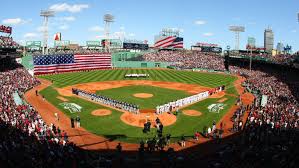
The oldest Major League baseball stadium in current use is none other than Fenway Park in Boston Massachusetts, built in 1912. It is the home field for the Boston Red Sox. Fenway Park is renowned for its distinctive features, unique character, and status as one of the oldest ballparks still in use in the United States.
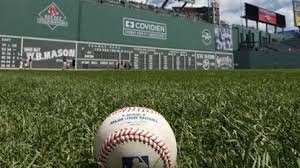
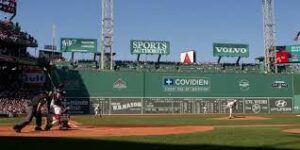
Famous for its 37-foot-high Green Monster left-field wall and other idiosyncratic dimensions, Fenway Park is the oldest and one of the smallest ballparks currently in use in the Major Leagues. Designed by James McLaughlin, Fenway opened the same week the Titanic sank in 1912 and underwent a major renovation in 1934, including the insertion of a hand-operated scoreboard in the base of the left-field wall. The current Red Sox ownership group, led by John Henry, Tom Werner and Larry Lucchino, took over in 2001 and made a series of additions and renovations throughout the park, most notably the addition of “Monster Seats'' atop the left-field wall. The changes increased the overall seating capacity by nearly 4,000 seats to its current total of 37,731.
In 1911 Red Sox owner John I. Taylor was looking for locations to build a new ballpark and later that year his father bought more than 365,000 square feet (33,900 square meters) of land in the Boston neighborhood of Fenway-Kenmore. In September work began on a stadium that Taylor called Fenway Park; while he claimed the name was inspired by the location, some suggested it promoted his family’s company, Fenway Realty.
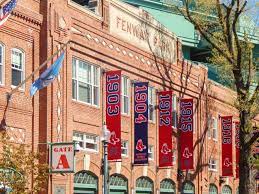
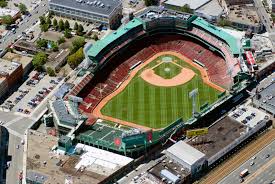
The first baseball game at the stadium was played on April 9, 1912, with the Red Sox defeating Harvard College in an exhibition match. The first professional game there was held on April 20, a 7–6 Red Sox victory over the New York Highlanders (later Yankees). (Navin Field [later Tiger Stadium] also officially opened that day in Detroit. but the ballpark closed in 1999 and was demolished in 2008.) At the time, however, Fenway was unfinished. Plans for a second deck had been scrapped, and much of the seating was not in place. Construction continued throughout the season, with right- and left-field bleachers being installed by the start of the World Series which Boston won over the New York (later San Francisco) Giants.
In the ensuing years, Fenway underwent a number of changes. A fire in 1926 destroyed the left-field bleachers, but new team owner Bob Quinn opted not to replace them, instead leaving just the back wall, which had been built with the original stadium, designed to prevent non-paying spectators from watching the game. After buying the Red Sox in 1933, Tom Yawkey initiated a major revitalization project that—despite another damaging fire—was completed before opening day in April 1934. Notable changes included a new, massive left-field wall that was 37 feet high. In 1946 an upper deck was finally added to Fenway, and the following year lights were installed, thus allowing for night games. Also in 1947 the left-field wall was painted green, and it eventually became one of the park’s most iconic features, known as the “Green Monster.”
Fenway Park, by any measurement, is the smallest ballpark in all of baseball. It’s also by far the oldest. But one important part of the park isn’t so small (and no, it’s not the Green Monster). It’s the press box, which is the largest in the majors. Built in the late 1980s, the press box is composed of three rows of seats (local media, national media and other media) and can hold upwards of 50 journalists.
Some other interesting facts:
- Pesky's Pole: Fenway Park is also famous for Pesky's Pole, a nickname given to the right-field foul pole. It is named after Johnny Pesky, a former Red Sox player, and is known for its relatively short distance from home plate.
- Ted William’s seat: If you’ve ever been to Fenway Park you may have noticed a solitary red seat (Section 42, Row 37, Seat 21) in the bleachers. This is the place where Ted Williams hit a 502-foot home run on June 9, 1946, which is, to this date, still the longest home run in Fenway Park history.
- Inside the Green Monster: Besides a scorekeeper and several rather large rats, the Green Monster is home to hundreds of signatures from current and former baseball players.
It’s a long-standing tradition in major league baseball—and a sort of rite of passage—for opposing players to sign their names on the inside of the wall the first time they come to Fenway Park. - Fisk Poll: Most Red Sox fans know the story behind the Pesky Pole, the pole on the right field line that stands a measly 302 feet from home plate and is the shortest porch in all of baseball. But how many fans know what the other foul pole is called? The left field foul pole actually has a name too, and a pretty important one if you’ve been following the Red Sox since 1975.The Fisk Pole is named for, of course, Carlton Fisk, who in Game 6 of the 1975 World Series hit a game-winning home run that miraculously stayed fair and ricocheted off the pole. The Fisk Foul Pole was named in 2005, making Fenway Park the only ballpark in major league baseball to have two named foul poles.
- Numbers: There are only 10 retired Red Sox numbers at Fenway. In order to have a number retired the player must have played 10 years with Boston, finished career with the club (later eliminated) and elected to the National Baseball Hall of Fame. Retired numbers are: 9-Ted Williams, 4- Joe Cronin, 1-Bobby Doerr, 8-Carl Yastrzemski, 27-Carlton Fisk, 6- Johnny Pesky, 14-Jim Rice, 45-Pedro Martinez, 26- Wade Boggs, 34-David Ortiz
In addition to the Red Sox, Fenway hosted numerous other games and events. From 1963 to 1968, it was home to the Boston Patriots (later New England Patriots) of the National Football League and various college football teams also competed there. Other sporting contests included boxing and wrestling matches and ice hockey games. Fenway also hosted a number of political events, including rallies by U.S. Pres. Franklin D. Roosevelt(1944), Barry Goldwater (1964), and Eugene McCarthy (1968). In 1993 the park began offering public tours, helping make Fenway one of Boston’s more popular tourist attractions.
Overall, Fenway Park is a symbol of baseball tradition and a living testament to the enduring connection between the sport, its history, and the city of Boston.