The Future of the DOME
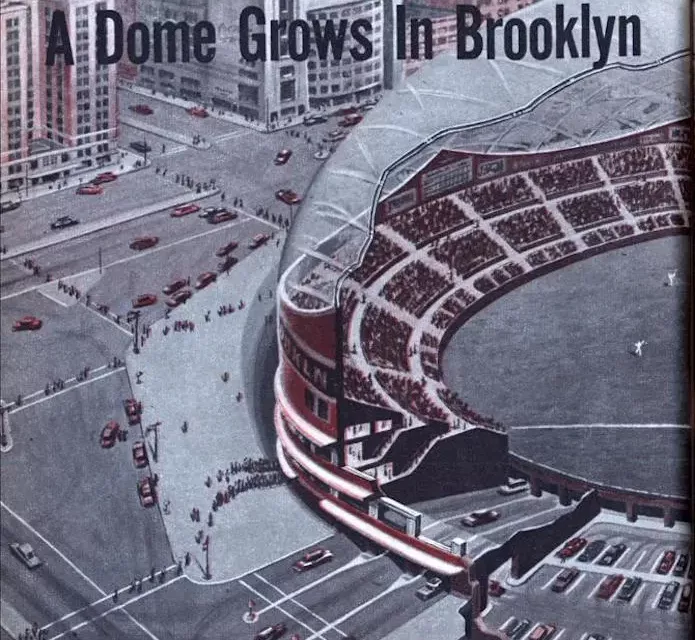
70 years ago there was a story reported in the Collier Magazine that reported on the design of a new domed stadium that would be built in Brooklyn, New York for the then Brooklyn Dodgers. The plans for this domed stadium (would have been the first of its kind) came from the mind of Walter O'Malley. Walter O’Malley, owner of the Brooklyn Dodgers, wanted to build a domed stadium in Brooklyn with Buckminster Fuller, designer of the geodesic dome. It was to replace Ebbets Field and be where the Barclay Center is now. The city of New York denied the project. The rest is history, but imagine if…
Walter O’Malley’s vision of a domed stadium in Brooklyn, New York, is a significant chapter in the history of baseball stadium development and the Dodgers' legacy.

The plan for the 52,000-seat ballpark was a $6 million project that included a movie theater, a shopping mall and the possibility of a retractable roof. It was also to have a field dimension of 380 feet all around.
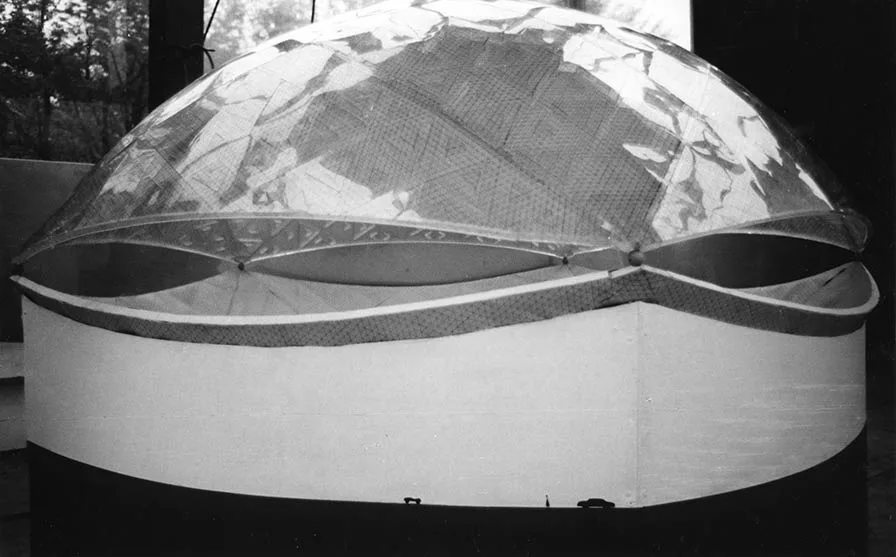
On May 26, 1955, O’Malley wrote a letter to noted architect R. Buckminster Fuller stating: “For some time we have been considering a new stadium for our Brooklyn Dodgers...My experience in operating a number of typical but antiquated stadia has convinced me that we lose a great deal of money each year because of inclement weather and for some time I have been talking about building a new stadium that, among other things, would have a dome over it of a translucent material...Baseball companies, unfortunately, do not have the resources of the large industrial companies. Price would become an extremely important issue...I believe this would open up a new horizon in baseball...I am not interested in just building another baseball park.”
The Idea of a Domed Stadium
O'Malley was interested in building a domed stadium for the Brooklyn Dodgers as a way to address the challenges of weather, scheduling, and attendance. The goal was to provide fans with a venue that would be less vulnerable to weather disruptions and would have the latest amenities to improve the fan experience.
- The idea of a domed stadium was also innovative because, at the time, retractable roofs or enclosed ballparks were rare or unheard of in Major League Baseball.
- O'Malley’s vision centered on building a stadium that could host games in all weather conditions, without rainouts, while also offering a modern facility for a growing baseball fanbase in Brooklyn.
The Plans and Their Challenges
The idea of a domed stadium in Brooklyn was part of O'Malley's broader efforts to modernize the team’s facilities and maintain competitiveness in an evolving city. O'Malley’s plans for a domed stadium would likely have resembled the modern concepts of enclosed venues, which provided fans with year-round baseball and increased revenue opportunities.
However, there were several hurdles:
- Financial Constraints: Building a domed stadium would be costly, especially for a growing major league franchise with tight budgets.
- Brooklyn Infrastructure: The logistical challenges of retrofitting or constructing a domed stadium in Brooklyn, with its densely populated urban environment, presented practical problems.
- Community and Political Challenges: Any construction project of that magnitude would have to navigate local politics, zoning issues, and community support.
The Move to Los Angeles
While O'Malley's idea of a domed stadium in Brooklyn was never fully realized, it symbolized his ambition to push baseball into the modern age. Eventually, due to financial challenges, challenges with New York politics, and a desire for a more modern ballpark, O'Malley made the controversial decision to move the Brooklyn Dodgers to Los Angeles in 1958.
The move allowed O'Malley to build Dodger Stadium, a new ballpark in Chavez Ravine with modern amenities and an open-air design. While not a domed stadium, Dodger Stadium’s design reflected O'Malley’s modern vision for baseball infrastructure.
Legacy of O'Malley’s Vision
Although the domed stadium in Brooklyn was never built, Walter O'Malley's vision paved the way for the concept of modern, multi-purpose stadiums that were climate-controlled and less vulnerable to weather. This idea has been realized in stadiums across Major League Baseball and other sports leagues worldwide. Houston’s Astrodome was still a decade in the works, so the dome would have been a first, at 300 feet high and 750 feet in diameter, with air venting, shadowless lighting fixtures, an underground parking lot and a promenade with shops and restaurants. It would have cost $6 million to construct and would have been privately financed. Compared to the construction of the Astrodome that cost just over 45 million.
Today, discussions about adding a dome or retractable roof to Dodger Stadium would likely be an extension of O'Malley's original vision for improving the game-day experience and adapting to new technologies while preserving the charm of classic ballparks. Currently, the following MLB teams have a roofed stadium (either domed or retractable):
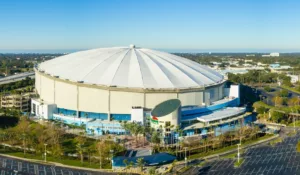
Tampa Bay Rays: Tropicana Field (currently down due to Hurricane)
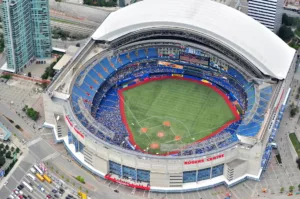
Toronto Blue Jays: Rogers Centre
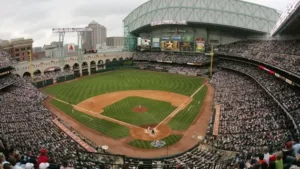
Houston Astros: Minute Maid Park
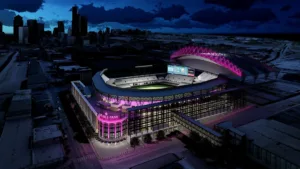
Seattle Mariners: T-Mobile Park
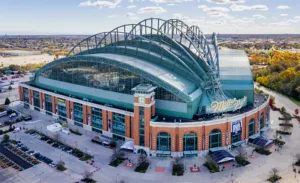
Milwaukee Brewers: American Family Field
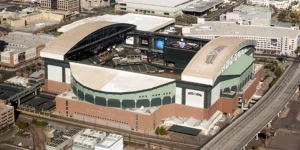
Arizona Diamondbacks: Chase Field
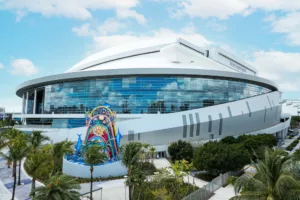
Miami Marlins: LoanDepot Park
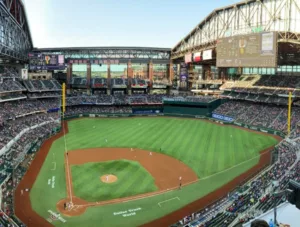
Texas Rangers: Globe Life Field
|
Tampa Bay Rays: Tropicana Field |
|
Toronto Blue Jays: Rogers Centre |
|
Houston Astros: Minute Maid Park |
|
Seattle Mariners: T-Mobile Park |
|
Milwaukee Brewers: American Family Field |
|
Arizona Diamondbacks: Chase Field |
|
Miami Marlins: LoanDepot Park |
|
Texas Rangers: Globe Life Field |